
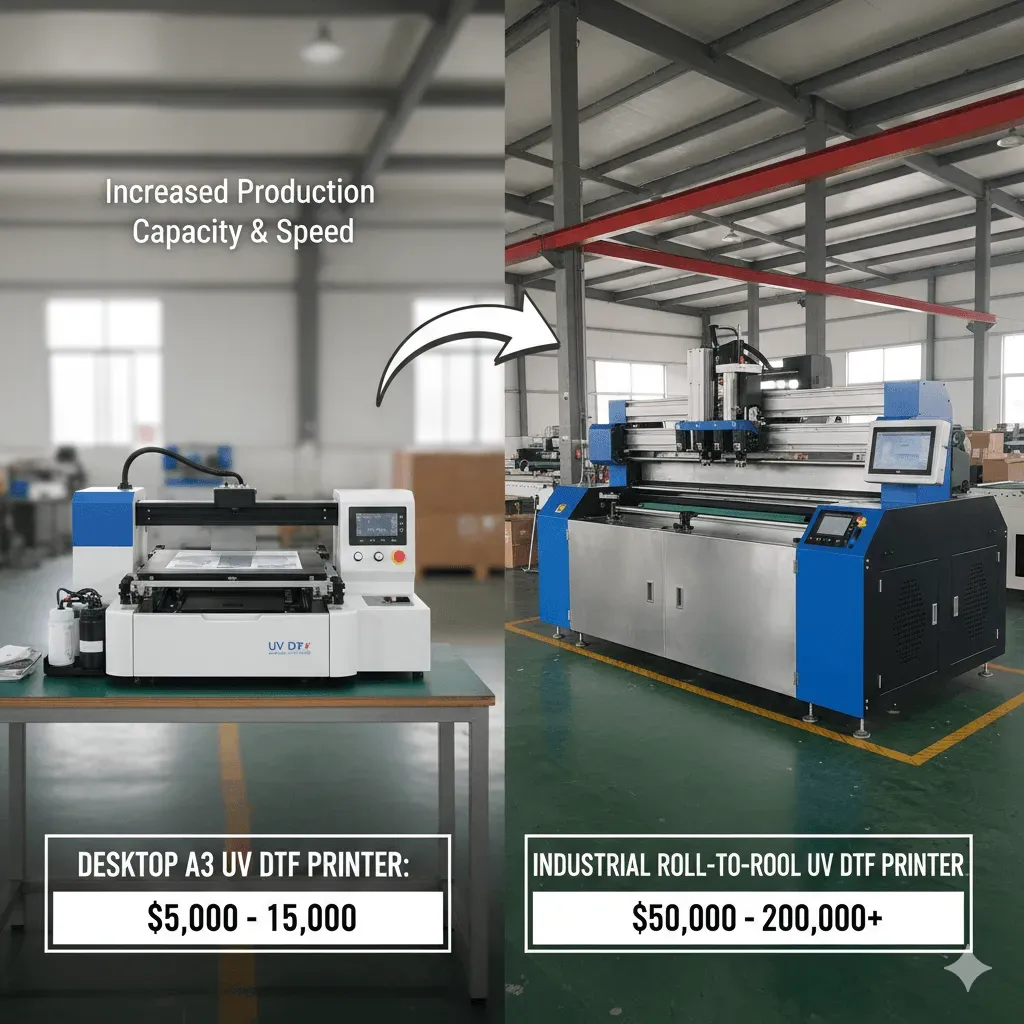
DTF printing cost breakdown is more than a sticker price; it maps out every financial detail from the initial equipment purchase to ongoing supplies and upkeep, helping you forecast profitability before committing to a printer, and it guides strategic choices about scale, process, and vendor selection. Viewed through the lens of total cost of ownership, this topic covers upfront investments, running costs for ink, film, and powders, and the predictable maintenance needed to keep production steady and predictable, including calibration, driver updates, and routine checks that minimize downtime. Understanding equipment costs means weighing the balance between a capable printer, complementary heat press, and essential workflow software, and recognizing how choices in speed, width, and ink system shape long-term value, reliability, and the ability to take on more high-margin projects. Meanwhile, ongoing consumables and service necessities—such as inks, films, fixatives, head cleaners, and spare parts—drive the recurring price per job and influence your budgeting accuracy, supplier relationships, and the flexibility to respond to demand spikes without sacrificing quality. By framing a budgeting strategy around these components, you can compare vendors, estimate per-print costs, plan for downtime, and align pricing with margins, ensuring your pricing reflects true costs while leaving room for growth and quality improvements over time.
DTF printing cost breakdown: a complete view of upfront and ongoing costs
A DTF printing cost breakdown aggregates upfront equipment investments with ongoing operating expenses to reveal the full financial picture. When evaluating the DTF printer cost, remember that the sticker price is only part of the story: ongoing supplies, maintenance, and workflow needs drive the true investment. In practice, you’ll want to compare the combined effect of equipment costs, the heat press, and any required RIP software as part of your budgeting process.
By mapping equipment costs, supplies, and maintenance to a monthly budget, shops can forecast profitability and plan for downtime. This approach supports a realistic DTF budgeting process that includes software licenses, energy use, and labor impact as well as the core costs of the printer and heat press. Over time, understanding the full cost of ownership helps you set pricing that sustains margins even when volumes fluctuate.
DTF printer cost and purchase considerations for new vs. used equipment
Choosing between new versus used DTF printers directly affects the upfront investment and long-term reliability. New machines typically come with stronger warranties and better access to service, influencing the overall DTF printing equipment costs. While used equipment can lower the initial price, you should factor potential maintenance needs, head replacements, and shorter remaining lifespan into your calculations.
Evaluate the total cost of ownership by projecting spare parts inventory, service contracts, and expected yield over time. In addition to the sticker price, consider the reliability of the unit, firmware updates, and compatibility with your RIP and workflow. Align these factors with your DTF printer cost expectations to avoid hidden expenses that erode margins.
DTF supplies price and how it influences per-print economics
Ink, film, and adhesive powders are the ongoing heartbeat of a DTF operation. The ‘DTF supplies price’ affects your cost per print, with white ink often representing a large and variable portion of that expense depending on print density and yield. When budgeting, compare ink yields, cartridge configurations, and a supplier’s access to bulk discounts to estimate per-shirt costs more accurately.
Bulking up orders and negotiating supplier terms can materially lower expenses over time. Track usage per print and per batch, then translate every purchase into a per-unit cost. This practice helps you optimize the balance between print quality and material efficiency, improving your overall profitability in the context of DTF printing budgeting.
Maintenance costs for DTF printing: preserving uptime and print quality
Maintenance costs include routine cleaning, head maintenance, and occasional part replacements such as seals or dampers. Regular servicing minimizes downtime and protects print quality, which is why maintenance costs for DTF printing must be forecasted as part of your monthly budget. Consider whether a service contract or on-site support makes the most sense for your production schedule.
Calibrating and cleaning the system, testing color management, and replacing worn components are all part of long-term reliability. Establish a maintenance reserve and a regular schedule to prevent unexpected failures. A disciplined approach to upkeep helps you maintain a stable cost base while extending the life of your equipment.
DTF printing budgeting: building a sustainable cost model for shops
A robust budgeting approach uses total cost of ownership (TCO), equipment amortization, monthly operating costs, and expected throughput to derive a realistic cost per print. Incorporate factors like energy consumption, labor, and software licenses into your DTF printing budgeting framework to capture all relevant expenses. This holistic view prevents budget gaps and supports long-term pricing strategy.
Model different volume scenarios and price points, then compare actual performance against projections. Regularly reviewing ink, film, and powder usage alongside maintenance spend enables you to adjust offers and product mix. With a dynamic budgeting process, you can scale efficiently while maintaining quality and profitability.
Choosing vendors and calculating total cost of ownership (TCO) for DTF systems
Vendor evaluation should consider the full spectrum of costs: DTF printer cost ranges, reliability, spare parts availability, and service terms. Weigh these against long-term DTF printing equipment costs, warranty coverage, and the vendor’s track record. A transparent assessment helps you avoid surprises that inflate ownership costs later.
Pilot testing, references, and performance data shed light on real-world energy usage, maintenance frequency, and substrate compatibility. Use this data to calibrate the price of supplies and the value of service plans, ensuring your decision aligns with your budget and projected throughput.
Frequently Asked Questions
What is the DTF printing cost breakdown and why is it important for budgeting?
The DTF printing cost breakdown is a view of all costs involved in starting and running a DTF operation, typically split into equipment costs, ongoing supplies, and maintenance. Knowing this breakdown helps you forecast total cost of ownership, set realistic prices, and compare vendors. In practice, the breakdown highlights the DTF printer cost, the related DTF printing budgeting considerations, and maintenance costs for DTF printing as you plan.
How does equipment cost factor into the DTF printing cost breakdown?
Equipment cost covers the upfront price of the printer, heat press, and related gear, plus software and peripherals. In the DTF printing cost breakdown, these items are the largest initial investment and influence long‑term cost per print. Key terms to track include DTF printer cost and overall DTF printing equipment costs.
What are the ongoing costs in the DTF printing cost breakdown?
Ongoing costs include the DTF supplies price for inks, film, powders, substrates, and cleaning supplies. Also included are maintenance costs for DTF printing, such as head cleaning, part wear, and optional service plans. Tracking these helps you estimate per‑print cost and plan supplier budgeting.
How should I budget for maintenance costs for DTF printing within the cost breakdown?
Set aside a monthly maintenance reserve based on expected service, part wear, and potential head replacements. Consider vendor service contracts and schedule routine maintenance to minimize downtime, all of which are core maintenance costs for DTF printing.
How can I apply DTF printing budgeting to estimate the total cost of ownership?
DTF printing budgeting combines upfront equipment costs with ongoing supplies and maintenance to estimate the total cost of ownership. Use this framework to project monthly expenditure, calculate the cost per print, and compare scenarios for different equipment tiers under the DTF printing cost breakdown.
What common pitfalls should I avoid in the DTF printing cost breakdown?
Common pitfalls include underestimating white ink costs, ignoring maintenance needs, failing to account for energy and space requirements, and not testing substrates. Addressing these helps ensure accurate DTF printer cost estimates, sustainable maintenance planning, and a realistic DTF printing budgeting approach.
| Aspect | What it covers | Typical cost considerations | Notes / Tips |
|---|---|---|---|
| Equipment costs | Upfront investment and long-term value for core components (DTF printer, heat press, conveyor dryer, ventilation, computer with RIP software). | Price ranges vary by capability: – Entry-level: several thousand to ~$10k – Mid-range: ~$12k–$25k – Industrial/production: $30k+ Consider total cost of ownership (TCO) and warranties. |
Factor in training, service, spare parts, and long-term reliability; higher upfront cost can reduce downtime and ongoing expenses. |
| Supplies costs | Ongoing consumables: inks (white ink is often the largest ongoing cost), film, adhesive powder, substrates/pre-treatments, and cleaning supplies. | Budget by per-print costs and monthly throughput: – Inks: varying by brand and yield – Film and powder: per-roll or per-batch costs – Cleaning supplies: periodic but essential |
Plan for bulk purchasing and supplier discounts; track ink yield and optimize RIP settings to reduce waste. |
| Maintenance costs | Ongoing upkeep to keep quality and uptime: cleaning, head maintenance, replacement parts, service contracts, calibration. | Costs can be variable; include routine maintenance and potential head/part replacements; consider a maintenance reserve. | Regular preventive maintenance reduces downtime and protects print quality; negotiate service plans and keep spare parts accessible. |
| Budgeting strategies | Frameworks to forecast and manage costs: Total Cost of Ownership (TCO), cost per print, supplier comparisons, downtime planning, and labor inclusion. | – TCO calculations across equipment, supplies, maintenance, and utilities – Cost-per-print tracking and optimization – Bulk pricing and vendor negotiation – Downtime contingency and labor costs |
Build flexible budgets; monitor actuals vs projections; adjust pricing and product mix to protect margins. |
| ROI and practical examples | Illustrative scenarios showing how decisions affect profitability (e.g., Shop A vs Shop B). | – Shop A: mid-range printer, modest throughput; moderate costs, margins depend on volume and supplier pricing. – Shop B: industrial setup, higher throughput; lower per-unit cost due to efficiency and maintenance reliability. |
Use real data to refine pricing, marketing, and product mix for growth. |
| Common pitfalls | Common missteps to avoid in budgeting and purchasing. | – Underestimating white ink usage and per-print cost – Neglecting maintenance and timely part replacements – Ignoring power/space requirements – Not testing with real substrates |
Establish guardrails, track consumption, and test materials to prevent cost overruns. |
Summary
HTML table describing the key points of the base content in English.