
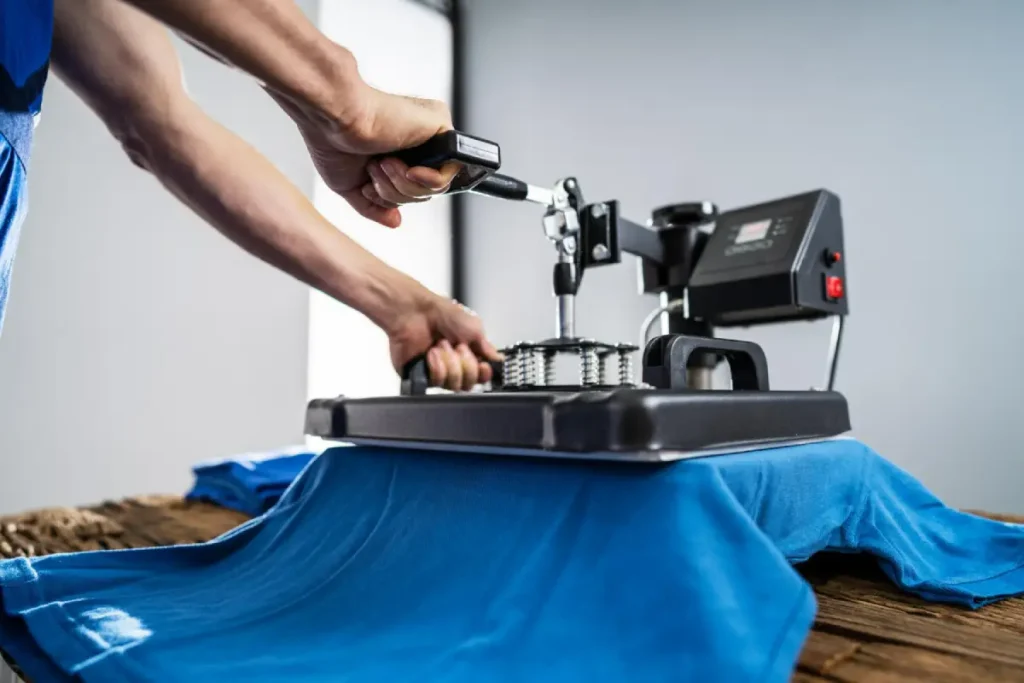
In the high-velocity world of custom apparel, the transition from a manual craft to a scalable business model is defined by one thing: **the stability of your output.** Many entrepreneurs start their journey with dtf technology, drawn to its ease of use, but soon find that success is not merely about printing—it is about the “Application Engineering” that happens at your heat press. If your goal is to build a brand that commands premium pricing, you must move beyond the basics and start managing your production as a rigorous technical system.
The beauty of professional dtf transfers lies in their potential for high-definition, retail-ready performance. However, this potential is easily squandered by improper application, such as inconsistent pressure or poor moisture management. At Harwin, we view apparel decoration as a specialized form of material science. Every print is an exercise in heat transfer dynamics, and the “soft-hand” finish that customers love is only achievable when you treat your workspace like an industrial lab rather than a craft room.
Humidity Control: The Silent Production Killer
A frequently ignored factor in print failure is the invisible impact of atmospheric humidity. The adhesive powder used in the process is highly hygroscopic, meaning it absorbs moisture from the air. In a humid production environment, this moisture remains trapped in the powder. During the curing stage, this trapped water expands, creating microscopic “voids” in the adhesive layer. The result? A print that looks fantastic at first but develops “pinholes” or peels prematurely after a few laundry cycles.
The solution is not complex, but it requires discipline. We recommend storing all your consumables—films, powders, and transfers—in climate-controlled environments. Using an airtight container with active desiccant packs is a simple, cost-effective way to ensure your adhesive remains in its optimal, moisture-free state. This level of environmental governance effectively eliminates the most common cause of “mystery failures” in custom print shops.
Supply Chain Strategy: Why Proximity Matters
In today’s retail climate, “speed-to-market” is often more important than the product price itself. Searching for dtf transfers near me is not just about logistics; it’s about shortening your design-to-delivery loop. A strong partnership with a high-quality regional printing house allows you to operate on a “lean” model, reducing the need for costly inventory storage while maintaining the ability to fulfill custom orders in record time.
This proximity also facilitates a collaborative technical relationship. A regional partner who understands the Harwin philosophy of quality can work with you to refine your “transfer recipes”—adjusting ink density, adhesive mesh size, and film finish to suit the specific needs of your fabric catalog. This isn’t just buying supplies; it is building a technical team that supports your brand’s growth, allowing you to focus on the creative side while leaving the complex printing science to the specialists.
Governance Through Standardized Protocols
Scaling a custom apparel business requires moving away from reliance on an “experienced operator’s gut feeling.” To scale, you must codify your knowledge into a Technical Production Matrix. This matrix should explicitly list the PSI pressure, dwell time, and cooling requirements for every fabric SKU you offer. By standardizing these parameters, you ensure that every garment produced—by you or your staff—meets the same rigorous durability standards.
Furthermore, perform “Objective Durability Audits.” Periodically cycle a sample from your production run through an industrial-grade laundry test. Gathering this empirical data allows you to provide your customers with a genuine “Wash-Tested” guarantee. When your business is backed by data, you cease to be just another “custom shop” and become a brand that customers can rely on, paving the way for higher margins and long-term customer loyalty.
Frequently Asked Questions
Why does “pre-pressing” garments change my results?
Pre-pressing is essential because it eliminates the microscopic moisture trapped in fabric fibers. If this moisture is not removed, it turns into steam during the press, which acts as a barrier and prevents the adhesive from fully bonding with the textile, leading to early print failure.
What defines a “premium” transfer versus a budget alternative?
Premium transfers exhibit superior elasticity. When you pull the fabric, the graphic should stretch with it and return to its original shape without cracking or “whitening.” If a print develops cracks or tears under tension, the adhesive formulation is likely too rigid for high-performance apparel.
How can I ensure consistent pressure on large-format designs?
Large graphics are susceptible to pressure loss at the edges. Always ensure your press is perfectly level and use a “platen cover” to help distribute force more evenly. If you still see unevenness, consider a “double-press” method—rotating the garment 180 degrees for a second, short-duration press to ensure the entire graphic is sealed.
Can I press on top of an existing print?
Avoid this at all costs. Re-heating a cured print will reactivate the adhesive and cause it to bleed, smear, or distort. Always apply prints on clean, unprinted areas of the fabric to maintain the clarity and professional finish of your designs.
Building a successful, high-quality apparel brand is a journey of continuous technical refinement. By mastering the potential of dtf, you position your brand to compete at the highest level of the custom merchandise market. Harwin is committed to providing the industry insights you need to turn your production floor into a professional, profitable enterprise. Start optimizing your workflow today—your commitment to quality is the most valuable investment you can make for your brand’s future.